










Most people choosing a workspace focus entirely on the desk — is it comfortable, is it available when I need it, is it close to home? Those things matter. But two pieces of infrastructure quietly determine whether a workspace actually supports a growing business or just gives you somewhere to sit: where your mail goes, and who you’re surrounded by.
This is exactly why mailboxes and a genuine community access network deserve as much thought as the desk itself. Below is a practical look at both, and how they work together at Workspace Junction.
The Problem With Running a Business Out of Your Home Address
If you’re a freelancer, consultant, or small business owner, there’s a good chance your home address is currently doing double duty — as your residence and as your business’s official mailing address. That arrangement creates real problems: your home address becomes public record on business registrations, client invoices, and vendor forms. Packages pile up when you travel. And nothing about a residential address signals “established business” to a new client evaluating whether to trust you.
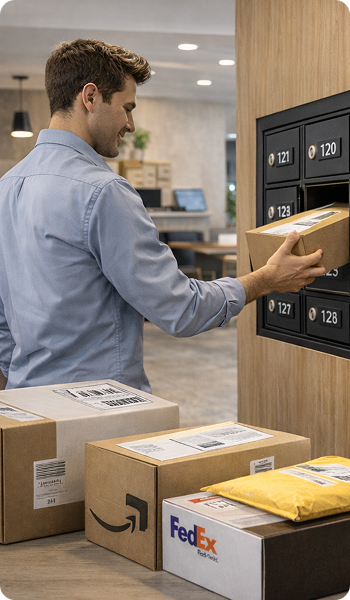
Mailboxes solve this directly. A dedicated mailbox at a professional location gives your business a real, physical address — separate from your home — where mail and packages are received, held securely, and ready whenever you need them.
What a Mailbox Actually Includes
At Workspace Junction, a physical mailbox isn’t just a slot with your name on it. It’s built around real usage patterns:
- Standard-size mailboxes (6½″ × 15½″ × 5¼″) for regular mail volume
- Extended access hours — 7:00 AM to 10:00 PM daily, so you’re not stuck waiting for a 9-to-5 office schedule
- Oversized package pickup and additional services available Monday through Friday for anything too large for the standard box
- Flexible prepay options — prepay 6 months and get the 7th free, or prepay 10 months and get 2 months free
If you want the full breakdown of pricing tiers and terms, our dedicated Mailbox page covers everything, including the minimum 3-month rental term.
Mailbox vs. Virtual Mailbox: Picking the Right Format
Not every business needs to physically walk in and collect mail. If you’re rarely on-site, or run your business fully remotely, a Virtual Mailbox might be the better fit — mail gets scanned and made available digitally, so you can review what’s arrived without a physical pickup.
A useful way to think about it: if you’re already coming into the building regularly for coworking or a dedicated desk, a physical mailbox integrates naturally into your routine. If you’re rarely local, virtual mail handling removes the friction of needing to be there at all.
Where Mailboxes Fit Into a Bigger Business Address Strategy
Mail handling is often just one piece of a broader need — establishing a credible, professional presence without renting full-time office space. That’s the territory covered by our Business Address plan, which combines a professional Oakbrook Terrace address with mail pickup and handling, ideal for business registration where permitted.
For businesses that want that address plus a bit more — occasional workspace access, discounted meeting rooms — the Virtual Office plans layer mail handling together with coworking day passes and meeting room discounts, so you’re not paying for a dedicated desk you’ll rarely use, but you still have somewhere to work when you need it.
The Other Half of the Equation: Who You’re Surrounded By
A desk and a mailing address solve the logistics. They don’t solve the isolation that comes with running a business alone — and this is where a real community access network changes the equation.
The Workspace Junction Community Network was built specifically around this gap. Instead of generic networking mixers, it’s structured around industry-specific Circles — Founder Circle, Healthcare Entrepreneurs Circle, Finance & Investment Circle, Legal Professionals Circle, Restaurant & Catering Owners Circle, Tech Innovators Circle, and Marketing Leaders Circle — so the people you’re meeting are actually relevant to your business, not just whoever happened to book a desk that day.
Why a Community Assistance Network Beats Generic Networking
Traditional networking often means a room full of people from completely unrelated industries exchanging business cards that go straight into a drawer. A structured community assistance network works differently because it’s designed around actual professional overlap:
- Founder Circle members trade notes on funding, partnerships, and startup growth with people facing the same stage-specific challenges.
- Restaurant & Catering Owners Circle members discuss staffing, operations, and scaling — and this circle specifically connects with opportunities through platforms like HalalCaters, giving food entrepreneurs a direct line to relevant industry connections.
- Legal Professionals Circle and Finance & Investment Circle members get access to conversations that are directly applicable to their practice, not generic small talk.
This is the difference between attending an event and actually building a network that helps your business move forward.
What Community Membership Actually Unlocks
Joining the network isn’t just about attending the occasional mixer. Depending on the membership tier, it includes:
- Access to workspace and one primary industry Circle
- Invitations to networking events, founder roundtables, and expert talks
- Discounted workshops and priority event registration at higher tiers
- Mastermind group access and ecosystem partner introductions at the Founder Pro level
For a business owner who’s spent months building in isolation, this kind of structured community access can shortcut relationships that would otherwise take years of cold outreach to build organically.
How These Pieces Work Together in Practice
Here’s where mailboxes and community access actually reinforce each other rather than functioning as separate add-ons. Picture a small catering business getting off the ground:
They need a professional business address so their registration paperwork doesn’t list a home address — solved by a Mailbox or Business Address plan. They need somewhere to occasionally meet vendors or clients — solved by Coworking day passes or Meeting Rooms. And they need relationships with other people in food service who understand their specific challenges — solved by joining the Restaurant & Catering Owners Circle within the Community Network.
None of these pieces alone builds a business. Together, they remove the logistical and relational gaps that keep a lot of small businesses stuck.
Choosing What You Actually Need
If you’re trying to figure out where to start, a few honest questions help:
Do you need a professional address mostly for mail and registration? Start with a standalone Mailbox or Virtual Mailbox.
Do you also need occasional workspace access alongside mail handling? A Virtual Office plan bundles both together at a reasonable monthly rate.
Do you want structured, industry-relevant relationships, not just a place to work? Join the Community Network and select the Circle that matches your industry.
Do you need all three — daily workspace, mail handling, and community? A Dedicated Desk plan combined with Professional or Founder Pro community membership covers the full picture.
Frequently Asked Questions
Do I need a physical mailbox if I already have a virtual office? Not necessarily — Virtual Office plans already include mail handling and notifications. A standalone physical mailbox is best if you specifically want in-person pickup access without the additional workspace components of a Virtual Office plan.
Can I use a Workspace Junction mailbox address for business registration? Yes, the Business Address and mailbox plans are designed to support business registration where legally permitted. It’s worth confirming your specific state or local requirements before registering.
Is the Community Network only for people who already have a desk or membership at Workspace Junction? No — community membership is available on its own, starting with access to one Circle, networking events, and community discussions, separate from any workspace booking.
What if my industry doesn’t match one of the listed Circles? Reach out directly — the network continues to expand its Circles, and members can also request to join additional Circles as the community grows.
How does the Restaurant & Catering Owners Circle connect to outside opportunities? This Circle specifically connects members with opportunities through platforms such as HalalCaters, giving food and hospitality entrepreneurs an added layer of industry-specific reach beyond the in-person network.